Solving Hob Top Problems: Identify Issues & Fix Common Faults
Is your hob top causing you headaches? From burners not lighting to elements failing to heat, hob problems are common and inconvenient. This practical guide will walk you through troubleshooting the most frequent issues found in gas, electric, and induction hobs. We’ll show you how to quickly identify the problem, offer straightforward DIY solutions where appropriate, and advise you on when it’s time to seek the expertise of a professional for safe and effective repair.
A malfunctioning hob can bring daily cooking to a grinding halt, causing immense frustration and disrupting your routine. But before you panic or consider a costly replacement, take a deep breath.
Common Hob Top Issues You Might Face: Hob top problems can range from minor annoyances to serious safety concerns, including:
- Burners not igniting or heating up properly
- Uneven cooking temperatures
- Unusual sounds or smells
- Faulty controls
Whether you’re dealing with a gas burner that won’t cooperate or an electric element that refuses to heat, these issues can leave you feeling frustrated and unsure about what to do next. Understanding the underlying cause is crucial for finding the right solution.
This comprehensive guide is designed to help you pinpoint specific issues with confidence, explore practical DIY fixes you can attempt, and, crucially, understand exactly when it’s essential to call in a qualified professional. Our ultimate goal is to get your hob top back in perfect working order, so you can cook with confidence and convenience once again.
Understanding Your Hob: Gas, Electric, and Key Components
Before we dive into troubleshooting, a basic understanding of your hob’s type and its fundamental components is incredibly helpful. Your hob’s design directly influences its operation, maintenance requirements, and the types of issues you might encounter. Let’s explore the two primary categories:
1. Gas Hobs These traditional hob tops operate using either natural gas or propane (LPG). They are characterised by:
- Open Flames: Providing instant heat control and immediate visual feedback.
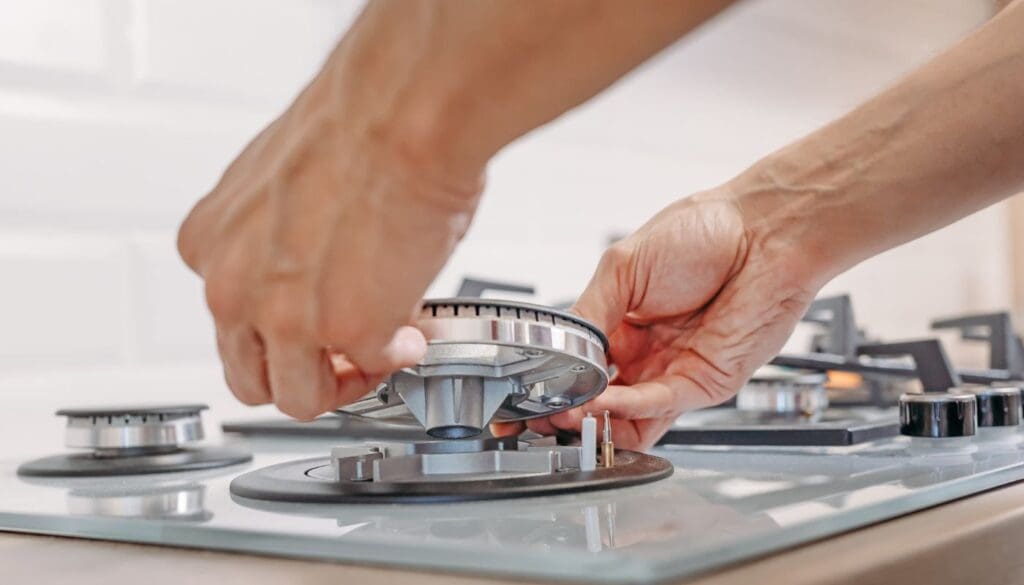
- Burners: Consisting of caps, heads, and grates where the flame emerges.
- Gas Valves: Regulating the flow of gas to each burner.
- Igniters: Producing the spark to light the gas.
- Thermocouples: Crucial safety mechanisms that cut off the gas supply if the flame extinguishes.
2. Electric Hobs Powered by your household electricity, electric hobs come in various forms, including traditional radiant coil hotplates and modern smooth ceramic or induction glass hob tops. They feature:
- Heating Elements: Coils or induction elements that generate heat.
- Hotplates/Glass Surface: The area where pots and pans are placed.
- Electronic Control Panels: For precise temperature regulation.
- Temperature Sensors: To maintain consistent heat.
- Power Connections: The internal wiring supplying electricity.
Key Components at a Glance:
- Gas Hob Components: Burner caps and heads, Ignition systems (igniters and spark modules), Gas valves, Control knobs, Thermocouple safety sensors.
- Electric Hob Components: Heating elements (coils, radiant zones), Hotplates/Glass surface, Control board (PCB), Temperature sensors, Power connections (wiring).
Why Knowing Your Hob’s Parts Matters
Understanding these basic parts isn’t just for repair professionals; it empowers you as a homeowner. Recognising your hob’s fundamental components helps you:
- Identify the Source of Problems Quickly: Pinpoint areas where an issue might be originating.
- Perform Basic Maintenance Safely: Confidently tackle simple cleaning or minor adjustments.
- Communicate Issues Effectively: Clearly describe problems to repair professionals, leading to faster, more accurate service.
- Make Informed Decisions: Better understand repair options versus potential replacement.
- Prevent Safety Hazards: Spot potential issues early on, before they escalate into dangerous situations.
Common Gas Hob Issues and Solutions
Gas hob problems can range from minor inconveniences to serious safety concerns. Here’s how to identify and address the most frequent issues. Remember: for any issue involving persistent gas smell or suspected gas leaks, always prioritise safety and contact a Gas Safe registered engineer immediately.
1. Gas Burner Won’t Ignite
A non-igniting burner can be incredibly frustrating when you’re trying to cook. This common problem usually stems from one of these causes:
- Food Debris Blockage: Spills or crumbs can clog the ignition port or burner holes.
- Misaligned Burner Parts: The burner cap or head might be slightly off-kilter, preventing a proper spark.
- Faulty Igniter: The small pin that produces the spark could be damaged or worn.
- Improper Gas Connection: (Less common for single burner issues, but possible if the hob has been moved or worked on).
DIY Fix: Step-by-Step Cleaning Process for competent person
- Ensure Safety: Turn off the gas supply to the hob at the main valve and unplug the hob if it’s connected to an electrical outlet.
- Disassemble: Carefully remove the burner grates, caps, and burner heads.
- Clean Thoroughly: Scrub the components with warm, soapy water and a non-abrasive brush. Pay close attention to the small holes (ports) in the burner head and the ignition pin. Use a toothpick or needle for stubborn blockages, but be gentle.
- Dry Completely: Ensure all parts are thoroughly dry before reassembly, as moisture can prevent ignition.
- Reassemble & Test: Carefully put the burner parts back into their correct positions. Turn the gas supply back on and test the ignition.
When to Call a Professional (Electrical & Gas Care):
- If, after thorough cleaning and reassembly, the burner still makes no clicking sound when you try to ignite it.
- If you hear the clicking sound, but no spark is generated at the igniter.
- If the sparks are weak or intermittent.
- If there’s visible damage to the igniter or its wiring.
- If you suspect an improper gas connection or any other gas-related issue.
2. Uneven Flames or Weak Burner
Irregular flame patterns or a consistently weak flame affect cooking performance and can indicate underlying issues.
- Common Causes:
- Clogged Burner Ports: Food residue, grease, or carbon build-up in the tiny holes where the gas exits.
- Dirty or Damaged Burner Caps: The cap helps distribute the flame evenly; if it’s dirty or warped, the flame will suffer.
- Improper Assembly: If the burner parts aren’t seated correctly.
DIY Fix: Burner Cap and Head Cleaning for competent person.
- Safety First: Turn off the gas supply and unplug the hob.
- Remove Parts: Take off the burner grates, caps, and burner heads.
- Soak & Scrub: For stubborn grime, soak the burner caps and heads in a solution of warm water and dish soap, or a vinegar solution, for 20-30 minutes.
- Clean Ports: Use a non-abrasive brush to scrub away residue. For the tiny burner ports, use a toothpick, paperclip, or compressed air (carefully) to clear blockages.
- Dry Thoroughly: Ensure all parts are completely dry before putting them back.
- Reassemble Carefully: Make sure the burner cap and head are perfectly aligned and seated.
When to Call a Professional (Electrical & Gas Care):
- If, after thorough cleaning and correct reassembly, the flames remain uneven, weak, or irregularly coloured (e.g., predominantly orange/yellow instead of a crisp blue).
- If you suspect an internal gas valve issue or a problem with the hob’s main gas manifold.
- If the issue affects multiple burners and cleaning doesn’t resolve it.
Gas Odor Detection: Emergency Protocol
**WARNING: GAS LEAKS ARE EXTREMELY DANGEROUS AND POSE A SIGNIFICANT RISK OF EXPLOSION AND CARBON MONOXIDE POISONING. DO NOT ATTEMPT TO FIND THE LEAK YOURSELF OR REPAIR IT.
If you detect the distinctive rotten egg smell of natural gas, or experience any other signs of a gas leak, take immediate action:
Emergency Steps – Act Fast!**
- DO NOT Operate Electrical Switches: Do not turn lights on or off, use your phone, or operate any electrical appliance in the vicinity – a spark could trigger an explosion.
- Turn Off Gas Supply: If safe to do so, immediately turn off the main gas supply valve to your property (usually located near your gas meter).
- Ventilate: Open all windows and doors to ventilate the area.
- Evacuate: Get everyone out of the property immediately.
- Call from Outside: Once safely outside, call the National Gas Emergency Service (known as Gas Emergency on 0800 111999 in the UK) and, if necessary, emergency services (999).
- DO NOT Re-enter: Do not re-enter your home until it has been declared safe by a qualified professional.
Important Note: Gas leaks and any repairs involving gas lines must only be handled by a Gas Safe registered engineer. Our Electrical & Gas Care engineers are fully qualified and Gas Safe registered to safely diagnose and repair gas hob issues. Don’t risk your life or property with gas; always call a professional.
Common Electric Hob Issues and Solutions
Electric hobs present unique challenges distinct from their gas counterparts. Here’s how to tackle the most frequent issues you might encounter with your electric hob.
1. Electric Burner Not Heating or Heating Unevenly
If your electric burner or hob zone isn’t heating up at all, or provides inconsistent heat, consider the following:
- Signs You Might Need a New Burner/Element (or professional help):
- Visible Damage: Look for visible damage like blistering, cracks, or warping on the burner surface or heating element.
- Uneven Heating Patterns: If it heats in patches or fails to glow uniformly (for radiant elements).
- Persistent Failure: If the burner consistently fails to heat after trying the quick fixes below.
DIY Quick Checks:
- Check Power Supply: Ensure the hob is properly plugged in (if applicable) and that the circuit breaker for your kitchen or hob hasn’t tripped. Reset the breaker if it has.
- Clean Element/Surface: For coil elements, ensure they are seated firmly in their receptacle. For ceramic or induction hobs, ensure the surface is clean and free from spills that might interfere with contact or sensors.
- Test Other Zones: If other zones are working, it points to an issue with the specific faulty burner/element or its controls.
When to Call a Professional (Electrical & Gas Care):
- If the element has visible damage (cracks, breaks, severe blistering).
- If the hob is getting power, but the specific burner/zone still does not heat at all after basic checks.
- If you suspect an issue with the hob’s internal wiring, thermostat, or control board.
- If you notice burning smells, smoke, or sparking from the element or beneath the hob.
2. Malfunctioning Controls and Indicator Lights
Issues with the control panel or indicator lights can range from annoying to completely preventing hob use.
- Common Warning Signs:
- Flickering or unlit display lights.
- Unresponsive touch controls or stiff/faulty knobs.
- Error codes appearing randomly or persistently.
- Buttons requiring excessive force to operate.
DIY Quick Fix: Power Reset
- Turn Off Power: Locate the circuit breaker for your hob or kitchen in your main fuse box.
- Cut Power: Turn the circuit breaker switch to the ‘OFF’ position.
- Wait: Leave the power off for at least 30 seconds to allow the control board to fully reset.
- Restore Power: Turn the circuit breaker back to the ‘ON’ position.
- Test: Try operating the hob controls again. This often resolves minor electronic glitches.
When to Call a Professional (Electrical & Gas Care):
- If the controls remain unresponsive or erratic after a power reset.
- If the hob consistently displays error codes that don’t clear.
- If you notice any burning smells, sparking, or electrical buzzing sounds from the control panel or beneath the hob. In this case, disconnect power immediately at the circuit breaker and do not use the hob.
- If the control panel itself is visibly damaged (cracked, melted).
Safety Note (Reiterated): If you notice burning smells, sparking, or electrical buzzing sounds from any part of your hob, disconnect power immediately at the circuit breaker and contact a qualified engineer. For gas hobs, if you smell gas, follow the emergency steps above immediately.
Final DIY Troubleshooting Thought: If your hob’s issues persist despite these troubleshooting efforts, it may be time for a professional intervention. For expert assistance you can trust, don’t hesitate to reach out to Electrical & Gas Care. Their team of skilled, qualified, and Gas Safe registered engineers can provide top-notch servicing and repair for all your household appliances across South Wales.
When to Call a Professional: Prioritising Safety and Expertise
While some hob issues lend themselves to DIY fixes, your safety and the long-term integrity of your appliance always come first. There are specific situations where attempting a DIY repair is not only unwd the long-term integrity of your appliance always come first. There are specific situations where attempting a DIY repair is not only unwise but can be extremely dangerous. These scenarios absolutely require the intervention of a qualified, experienced professional.
Here are the critical signs and situations that demand professional engineer intervention:
For Gas Hob Issues (Always Call a Gas Safe Registered Engineer!):
- Any Gas Line Modifications or Repairs: This is legally mandated to be performed only by a Gas Safe registered engineer in the UK.
- Persistent Gas Leaks: If you detect a gas smell or suspect a leak at any time, even after attempting basic troubleshooting.
- Complex Ignition System Failures: Beyond simple cleaning, if the igniter unit itself or its wiring is faulty.
- Damaged Gas Valves or Regulators: Issues with these crucial components directly affect gas flow and safety.
For Electric Hob Problems:
- Exposed or Damaged Wiring: Any visible fraying, scorching, or breakage of electrical wires.
- Control Board Malfunctions: If a power reset doesn’t resolve unresponsive or erratic controls.
- Persistent Power Supply Issues: If the hob repeatedly trips the circuit breaker or shows signs of insufficient power.
- Internal Component Failure: Issues with internal thermostats, relays, or heating elements that cannot be accessed safely.
General Safety Red Flags (For All Hob Types):
- Burning Smells: Any persistent or strong burning smell during operation that isn’t from cooking residue.
- Unusual Sounds or Vibrations: Loud buzzing, grinding, or excessive rattling.
- Sparking from Any Component: Beyond the normal ignition spark of a gas hob, any unexpected sparking is a critical warning.
- Cracked Glass Hob Surfaces: A cracked ceramic or induction glass hob is a major safety hazard and requires professional assessment.
Your Trusted Solution: Electrical & Gas Care
In any of these cases, or if you simply feel unsure or uncomfortable attempting a repair yourself, it’s absolutely crucial to seek out professional help. Electrical & Gas Care offers fast, safe, and reliable repair services for all hob brands and models across Caerphilly, Cardiff, Newport, Swansea and South Wales area.
Our qualified and Gas Safe registered (for gas hobs) engineers possess the specialised tools, in-depth knowledge, and extensive experience to handle even the most complex hob repairs safely and effectively. We understand that many hob manufacturers also recommend specific certified engineers – and we align with those professional standards.
Choosing a professional ensures your appliance is repaired correctly, safely, and often, with a guarantee on the work performed.
Conclusion: Keep Your Hob Safe, Efficient, and Reliable
A well-functioning hob is more than just a convenience; it’s absolutely crucial for the safety and efficiency of your entire kitchen. As this guide shows, while regular checks and basic maintenance can prevent many common issues, and some minor fixes are manageable, knowing your limits is paramount.
Remember these key takeaways for a healthy hob:
- Address Issues Promptly: Don’t ignore problems; tackling them early can prevent escalation.
- Perform Regular Cleaning & Maintenance: A clean hob is an efficient and safer hob.
- Prioritise Safety Above All Else: Especially when dealing with gas or electricity.
- Know Your Limits with DIY Repairs: Don’t hesitate to call an expert for complex or dangerous issues.
Your hob’s longevity, performance, and most importantly, your family’s safety, depend on proper care and timely, expert attention to problems. While you can certainly start with simple troubleshooting steps, never hesitate to call a professional when faced with complex issues or any safety concerns.
For reliable, safe, and expert hob repair services in South Wales, trust Electrical & Gas Care. Our qualified and Gas Safe registered engineers are ready to restore your hob’s functionality and your peace of mind. A properly maintained hob not only ensures delicious meals but also provides lasting safety for you and your family.
Don’t let hob troubles disrupt your kitchen – contact Electrical & Gas Care today!